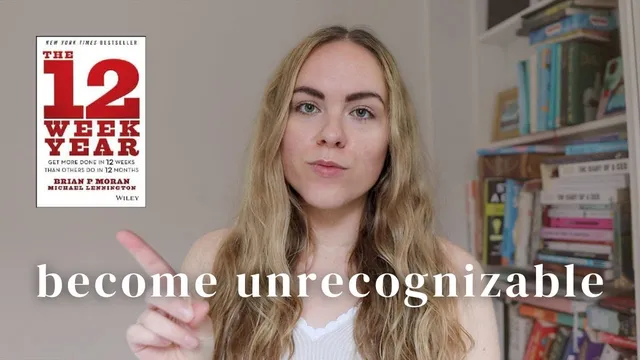
Change your life in 90 days - the 12 week year
Based on Ciara Feely's video on YouTube. If you like this content, support the original creators by watching, liking and subscribing to their content.
Use the last 12 weeks to pursue only three to four high-impact goals rather than postponing ambitions to “next year.”
Briefing
The core message is that the final 12 weeks of the year are a practical window for real life change—because focusing on a small set of high-impact goals for a short, defined period beats the vague “next year” mindset. Instead of letting the year slip into holiday living and postponing ambitions until 2025, the 12 Week Year planning system pushes people to concentrate on three or four goals that directly move them toward the life they want. The payoff: more progress in 12 weeks than most people manage in 12 months, with enough momentum to stay motivated long enough to see meaningful results.
A central prerequisite is building a compelling vision that connects goals to personal values. Without a vivid picture of what a fulfilling life looks like, goals can be completed yet still fail to create lasting satisfaction. The framework offers multiple ways to clarify that vision: creating a vision board (including a longer-term version for five years or more), journaling about how different life areas should look (health, family, career), mapping an “ideal day” that reflects desired routines and priorities, and using a more sobering prompt—imagining what a tombstone would say or how life would look decades from now if current habits continue. These exercises are meant to expose whether someone is actually moving toward what matters, or simply drifting.
Once the vision is set, the next step is choosing the right goals for Q4. In business terms, Q4 can mean finishing strong to hit remaining quotas or planning foundations for the next year; the system treats it as both, using the time to lay groundwork so January starts with momentum rather than overwhelm. The guidance is to select goals that will still matter after a couple of weeks—hence the cap of three to four goals. For people who want to “finish the year strong,” the method suggests reviewing earlier goal-setting and picking the items most aligned with the life vision.
To decide what to prioritize, the transcript recommends an “areas of life evaluation,” rating performance across life domains and targeting the areas with the most need for improvement. If health is already strong, it shouldn’t automatically become a 12-week goal; if family time is lagging, it can become a concrete target. The system also encourages identifying what not to carry into 2025—habits, unfinished projects, or financial and administrative messes that can be cleaned up now.
Planning turns intentions into execution. A 12-week plan should be built before starting, with tasks scheduled across weeks and time blocks reserved for each goal. The transcript emphasizes habit stacking—adding new habits onto existing routines—along with using a weekly schedule to find where large project blocks (like multi-hour research work) or smaller recurring sessions (like audition practice) can realistically fit. Goals should be broken into projects and habits, with early weeks often reserved for setup so later weeks can focus on consistent action.
Finally, accountability and tracking keep the system rigorous. The approach uses a mix of lag and lead indicators, with special attention to input metrics (activities under personal control) because output metrics can be influenced by external factors. Weekly scoring and weekly review meetings—ideally with others—help adjust the plan and improve next week’s results. The overall structure is simple: vision, goals, plan, and accountability—compressed into a 12-week sprint designed to produce tangible change before the year ends.
Cornell Notes
The 12 Week Year method reframes the last quarter as a focused sprint: people can create major life change by pursuing only three to four high-impact goals over 12 weeks rather than waiting for “next year.” The process starts with a compelling vision built through tools like vision boards, journaling, an “ideal day” map, and prompts such as what a tombstone would say or where life is headed if current habits continue. Goals are chosen using alignment with that vision and an areas-of-life evaluation that targets the domains needing the most improvement. A detailed plan follows—time blocks, project sequencing, and habit stacking—then weekly scoring and accountability keep progress on track using lead (input) metrics and review cycles.
Why does the framework insist on a “compelling vision” before picking goals?
What are the main exercises used to build a life vision, and what does each reveal?
How does the method choose which goals to pursue in the final 12 weeks?
What does “planning” look like in practice under the 12 Week Year system?
How does the system track progress and adjust week to week?
What role does accountability play beyond personal motivation?
Review Questions
- Which vision-building exercise would best expose a mismatch between current habits and desired life outcomes, and why?
- How would you select your three to four 12-week goals using both an areas-of-life evaluation and alignment to your vision?
- What lead indicators would you track for a goal where the final outcome depends partly on external factors?
Key Points
- 1
Use the last 12 weeks to pursue only three to four high-impact goals rather than postponing ambitions to “next year.”
- 2
Build a compelling life vision first, using tools like vision boards, journaling, and an “ideal day” to ensure goals connect to values and fulfillment.
- 3
Choose Q4 goals by aligning them with the life vision and prioritizing the life domains that score lowest in an areas-of-life evaluation.
- 4
Create a detailed 12-week plan before starting, including weekly time blocks, project sequencing, and habit stacking onto existing routines.
- 5
Break each goal into setup projects and ongoing habits so early weeks remove friction and later weeks can focus on consistent action.
- 6
Track progress with weekly scoring that emphasizes lead (input) metrics you control, then review results to adjust the next week’s plan.
- 7
Add accountability through weekly reviews with yourself or others to maintain rigor and improve performance over the full 12-week cycle.