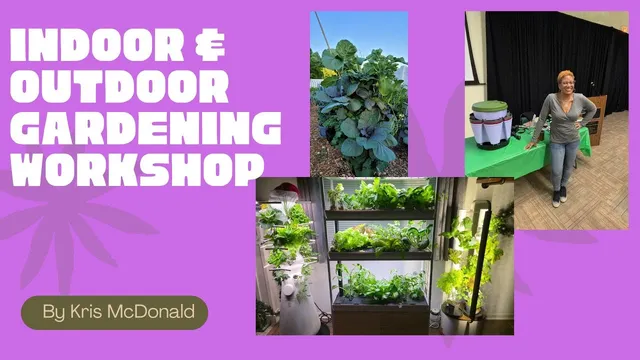
Getting started with Indoor & Outdoor Gardening with Kris McDonald | Gardening for Beginners
Based on LittleTechGirl's Digital Homestead's video on YouTube. If you like this content, support the original creators by watching, liking and subscribing to their content.
Hydroponics can be beginner-friendly when growers start with compact all-in-one systems and learn one method at a time (aeroponics, DWC, or Kratky).
Briefing
Indoor and outdoor gardening can be made practical for beginners by starting small and choosing the right growing method—especially hydroponics—then pairing it with a simple, repeatable routine for light, nutrients, pests, and timing. Kris McDonald, a Chicago-based IT support professional and long-time gardening blogger, frames gardening as something anyone can learn through low-risk experiments: begin with compact systems, use overhead grow lights for indoor seedlings, and don’t wait until summer to start planning.
Her hydroponics pitch centers on growing without soil using nutrient solution in water. She pushes back on the common belief that hydroponics can’t grow typical vegetables like tomatoes and peppers, arguing that the method’s benefits are tangible: cleaner setups, less space, reduced weed pressure, fewer soil-borne problems, and faster growth compared with soil. She also highlights a key control advantage—when plants are grown indoors, growers can control what goes into the water and avoid unknowns from store-bought soil.
McDonald’s personal timeline is used to normalize the learning curve. She tried gardening in 2013 with mint that quickly attracted Japanese beetles, restarted later with window-seal plants, and then returned again during the pandemic with patio pots. A major turning point came when she bought an Arrow Garden for her daughter in 2018; she ended up expanding the setup dramatically, eventually building hydroponics across multiple areas of her home. Today, she uses several brands and system types, but she narrows the lesson to three hydroponic approaches: aeroponics (roots misted or exposed to nutrient-rich water), DWC (deep water culture with an air stone for oxygen), and Kratky (a passive, no-pump jar method).
For beginners, she offers a “start small” shopping philosophy and a safety-and-simplicity checklist. All-in-one systems like Arrow Garden are presented as the easiest entry point because lights and pumps are integrated, and many kits include seeds and nutrients. When building DIY Kratky setups, she recommends using amber containers to block light and prevent algae, plus food-safe plastics for reservoirs. For indoor success, she stresses grow-light fundamentals: overhead, full-spectrum LED lighting is preferred over ordinary indoor light, and seedlings need long daily light exposure (often 12–16 hours in winter). A fan is also recommended to simulate airflow, strengthening plants and helping leafy greens avoid going to seed.
Outdoor gardening gets a parallel beginner framework: raised beds and containers are favored in Chicago-area conditions with hard clay soil, and soil can be stocked cheaply by buying during end-of-summer clearance. She emphasizes annual soil refresh through amendments like worm castings, mushroom compost, bone meal, blood meal, and organic granular fertilizer, rather than discarding soil. Timing matters—tomatoes, peppers, and eggplant should be started indoors early, with local frost-date guidance via almanac.com.
Pests and maintenance are treated as daily reality, not a deterrent. She recommends checking plants frequently, rinsing off aphids, and using targeted organic controls such as BT for caterpillars and Sluggo Plus for slugs and pill bugs. Harvesting often is framed as both the payoff and the engine of continued production. The session ends with practical encouragement to grow what people actually want to eat, plus a giveaway of hydroponic systems and a call to join gardening and preserving communities for ongoing support.
Cornell Notes
Kris McDonald lays out a beginner-friendly path into both indoor and outdoor gardening by focusing on method choice, light, timing, and maintenance. Hydroponics is presented as a soil-free way to grow vegetables faster and with tighter control over nutrients, using aeroponics, DWC, and the passive Kratky jar method. For indoor seedlings, overhead full-spectrum LED grow lights and a gentle fan help prevent weak, “leggy” growth and reduce early bolting in leafy greens. Outdoor gardening is made manageable through raised beds (especially in hard clay), annual soil refresh with compost and organic amendments, and starting seeds early based on local frost dates. Frequent checking for pests and harvesting often are treated as the routine that keeps yields coming.
Why does hydroponics work for common vegetables, and what practical benefits does it offer beginners?
What are the three hydroponic methods McDonald teaches, and how do their setups differ?
How can a beginner build a simple Kratky jar, and why does container color matter?
What indoor lighting and airflow rules prevent common seedling problems?
How should outdoor gardeners handle soil and timing in a Chicago-area context?
What pest-management approach does she recommend for beginners?
Review Questions
- What specific conditions (light duration, light position, and airflow) does McDonald say are most important for indoor seedlings and leafy greens?
- Compare aeroponics, DWC, and Kratky: what equipment is required for each, and what tradeoffs does that create for beginners?
- How does McDonald recommend deciding when to start seeds and when to move plants outdoors, and what tool does she use to calculate local dates?
Key Points
- 1
Hydroponics can be beginner-friendly when growers start with compact all-in-one systems and learn one method at a time (aeroponics, DWC, or Kratky).
- 2
Overhead full-spectrum LED lighting and long daily light exposure (often 12–16 hours in winter) help prevent leggy, weak seedlings indoors.
- 3
A gentle fan improves plant strength and airflow, and it can reduce leafy greens bolting in warm indoor conditions.
- 4
Outdoor gardening becomes more manageable with raised beds or containers in hard-clay areas, plus annual soil refresh using compost and organic amendments.
- 5
Start seeds based on local frost dates (using almanac.com), with tomatoes/peppers/eggplant typically waiting until mid-May in the Chicago area.
- 6
Frequent garden checks and targeted organic pest controls (BT for caterpillars; Sluggo Plus for slugs/pill bugs) reduce damage without blanket treatments.
- 7
Harvesting often is treated as a production strategy: regular picking encourages continued yield rather than one-time harvests.