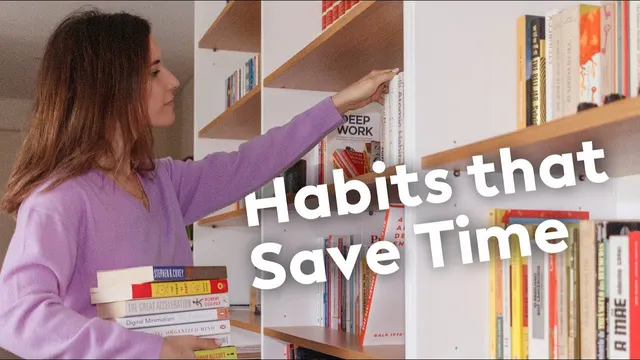
How I Find Time for Everything
Based on Mariana Vieira's video on YouTube. If you like this content, support the original creators by watching, liking and subscribing to their content.
“Time for everything” is reframed as a system problem: no one can do everything, so the goal is choosing what matters and protecting energy.
Briefing
“Time for everything” isn’t about squeezing in more hours—it’s about using a framework to decide what matters, lower impossible expectations, and build routines that create steadiness. The core message is blunt: no one can truly do everything, and the feeling of being behind usually comes from unclear priorities, unrealistic self-demand, and working without rhythm. Instead of chasing productivity for its own sake, the approach focuses on alignment—choosing the few things that move the needle, then structuring days so energy doesn’t get drained by constant decision-making.
The first pillar is priorities, framed as the real root of most “time problems.” Urgent tasks and guilt-driven commitments crowd out important work, while some items on a to-do list shouldn’t belong to a person at all—taken on because they felt obligated. A monthly exercise helps cut through the noise: list everything on the plate, circle the top three items that actually move the needle, cross out what can wait or doesn’t matter, and highlight what sparks genuine enthusiasm. Patterns often emerge—time spent on draining activities, overcommitment from not saying no, or pursuing goals that aren’t truly personal. For long projects, the method shifts from chasing productivity to mapping the tasks required to finish the work, even if it takes months. Saying no to unimportant requests becomes a “yes” to what’s important, and clarity reduces decision fatigue because choices better match values.
The second pillar is expectations—specifically, rejecting the cultural pressure to do more, be more, and be perfect across every role. The guidance is that burnout often follows from impossible standards, not laziness. A key mindset shift: not every day has to contain everything. Some days are for deep productivity, others for slow recovery; some weeks are for creation, others for rest and catching up. That’s described as rhythm, not failure. Daily reflection reinforces the shift away from perfectionism: at day’s end, ask what went well and what to let go of. The underlying principle is to stop treating oneself like a machine and instead plan around human energy fluctuations and life disruptions.
The third pillar is routines—the “how” that supports priorities and expectations. The transcript describes two extremes: rigid rituals that trigger panic when life deviates, and a no-routine approach where tasks happen only by willpower. The balanced middle keeps routines simple and freeing: fewer daily decisions, enough structure to reduce mental load, and room for flexibility. Practical examples include a slow morning with coffee and family time before checking the phone, a daily brain dump, planning the day in three chunks (morning, midday, evening) rather than hour-by-hour, and a quick end-of-day check-in. Small anchors—like a consistent playlist during focused work or making tea—help routines feel meaningful. Routines should evolve as life changes, supporting rather than constraining.
Finally, the workflow is reinforced with a task-management tool, ACFlow. It uses a universal inbox to gather tasks from connected apps, time blocking via drag-and-drop into a calendar, a co-pilot system that learns work patterns to suggest and auto-assign tasks, and stats that reveal where focus and time go. The takeaway is a practical blend: choose what matters, adjust how hard you demand from yourself, build steady routines, and use simple systems to reduce chaos—so progress fits real life rather than constant overextension.
Cornell Notes
The transcript argues that “having time for everything” is unrealistic; the workable goal is to create a system for choosing what matters, managing self-expectations, and maintaining routines. Priorities come first: urgent tasks and guilt-driven commitments often crowd out important work, so a monthly exercise identifies the top three needle-movers and what can be dropped or delayed. Expectations come next: perfectionism and impossible standards lead to burnout, so not every day needs to contain everything—days and weeks can follow different rhythms. Routines provide the “how” by reducing daily decision load through simple, flexible rituals like a slow morning, a brain dump, three-part day planning, and an end-of-day check-in. The approach matters because it replaces constant running on empty with aligned, repeatable progress.
Why does the transcript treat “time problems” as a priority problem rather than a scheduling problem?
What does “adjust expectations” look like in practice, and how does it prevent burnout?
How are routines positioned as “freeing” rather than restrictive?
What’s the role of task mapping in avoiding “productivity for productivity’s sake”?
How does ACFlow fit into the framework of priorities, expectations, and routines?
Review Questions
- What monthly exercise helps identify the top three “needle-movers,” and how does it change day-to-day decision-making?
- How does the transcript define “rhythm” as opposed to failure when some days or weeks are slower or quieter?
- Which routine elements reduce decision load in the transcript (morning, planning, and end-of-day), and why are they kept simple?
Key Points
- 1
“Time for everything” is reframed as a system problem: no one can do everything, so the goal is choosing what matters and protecting energy.
- 2
Urgent tasks and guilt-driven commitments often crowd out important work, so distinguishing urgent from important is the starting point.
- 3
A monthly review exercise—listing everything, circling the top three needle-movers, and crossing out what can wait—reveals patterns like overcommitment and misaligned goals.
- 4
Expectations should match human reality: not every day needs to include everything, and daily reflection (what went well, what to let go) helps replace perfectionism with progress.
- 5
Routines should be simple and flexible—structured enough to reduce daily decisions, but adaptable as life changes.
- 6
For large projects, mapping the tasks required for completion prevents chasing productivity for its own sake.
- 7
ACFlow supports the framework by centralizing tasks, enabling time blocking, offering smart suggestions/auto-assignments, and providing time-use stats.