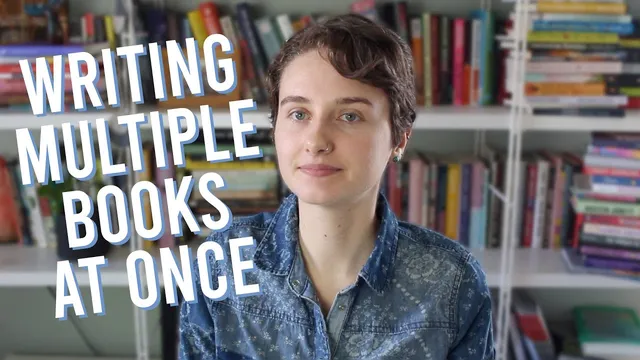
How I Write Multiple Books at Once
Based on ShaelinWrites's video on YouTube. If you like this content, support the original creators by watching, liking and subscribing to their content.
Multiple projects can increase inspiration and keep a writer’s voice feeling fresh by adding variety and preventing stagnation.
Briefing
Writing multiple projects at once can be a practical way to keep a writer energized, reduce burnout, and stay productive—especially for people who get bored or temporarily lose momentum when they work on a single book for too long. Jaylen’s core case is that variety isn’t just a preference; it can protect the quality of a writer’s voice and help prevent the “shiny new idea syndrome,” where a fresh concept repeatedly derails ongoing drafts. By rotating between projects, new ideas can be explored without abandoning older work, and the energy from one project can carry into the next.
The approach also functions like a built-in system for breaks. Instead of taking a full break from writing when a specific draft stalls or fatigue sets in, a writer can step away from the stuck project and move to another task. That flexibility matters during feedback cycles too: when a book is waiting on a critique partner, or when a draft is resting between revisions, other projects provide “something to do” without forcing progress on the wrong timeline. In this framework, multiple projects aren’t a distraction—they’re a buffer that keeps writing moving even when one piece can’t advance.
Still, the method comes with tradeoffs. Drafting multiple projects generally takes longer overall because attention is split, so each individual book may progress more slowly than if it were the only focus. Over a multi-year span, one writer might finish two books concurrently while another finishes one book at a time; neither path is automatically more productive, but the time-to-completion for each project changes. The system also isn’t universal: some writers are more “singularly focused,” and others can get overwhelmed by juggling too much. Jaylen emphasizes that the right setup depends on personality and capacity.
To make the juggling workable, Jaylen uses a flexible structure called “working in blocks.” A block is a task tied to a specific project—examples include drafting chapters, revising a short story after feedback, or doing line edits. Blocks can last anywhere from days to months, but each has a generous deadline and a clear next step. Rather than tracking daily word counts, the writer sets broad goals for when each block should be completed, often planning a couple blocks ahead so the workflow stays organized while still adapting to what’s practical.
Short stories play a key role in the rotation. When ideas strike, Jaylen treats short fiction as a “magical moment” that can be paused into the schedule, especially during long novel drafts when progress can feel invisible. Finishing a short story provides the satisfaction of completion, which helps counter the stagnation that can come from being “dead in the middle” of a novel.
Finally, the system requires restraint. Jaylen warns against overloading—pruning the number of active projects when stages pile up. When overwhelmed, the fix is to finish what’s already in motion (for example, completing editing tasks before starting new work) and then ramp up again more slowly. The takeaway is less about writing many books at once and more about managing momentum: enough variety to stay fresh, enough structure to stay on track, and enough pruning to avoid chaos.
Cornell Notes
Writing multiple projects at once can keep a writer inspired, protect voice quality, and prevent “shiny new idea syndrome” by letting new ideas be explored without abandoning older drafts. The main mechanism is flexibility: when one project stalls or fatigue hits, the writer switches to another task instead of stopping writing entirely. Jaylen’s system uses “working in blocks,” where each block is a project-specific task (drafting, revising, line edits) with a generous deadline, and progress is tracked by block completion rather than daily word counts. Short stories are used as high-satisfaction outlets during long novel drafts, helping maintain momentum. The approach works best when the writer can handle the slower per-project timeline and can prune projects before overload.
Why does rotating between projects help some writers avoid burnout and quality drop-offs?
How does the “break without taking a break from writing” idea work in practice?
What tradeoff comes with writing multiple projects concurrently?
What is “working in blocks,” and how does it keep multiple projects organized?
Why are short stories treated as an important part of the system?
What does “pruning” look like when juggling becomes overwhelming?
Review Questions
- How does the block-based approach change how you measure progress compared with daily word counts?
- What kinds of situations (stuck draft, feedback waiting, fatigue) make switching projects most useful?
- What signs suggest you should prune the number of active projects, and what’s a concrete way to do it?
Key Points
- 1
Multiple projects can increase inspiration and keep a writer’s voice feeling fresh by adding variety and preventing stagnation.
- 2
Rotating projects helps avoid “shiny new idea syndrome” by allowing new ideas to be pursued without abandoning current drafts.
- 3
Switching tasks lets writers take breaks from specific projects while continuing to write overall, including during feedback or rest periods.
- 4
The main downside is that each project may progress more slowly, so time-to-completion per book increases even if overall output remains strong.
- 5
Jaylen’s system uses “working in blocks”: project-specific tasks with generous deadlines, tracked by block completion rather than daily quotas.
- 6
Short stories can act as momentum boosters during long novel drafts by delivering the satisfaction of finishing something quickly.
- 7
Overloading is managed through pruning—finishing existing editing stages before starting additional projects and ramping up gradually.