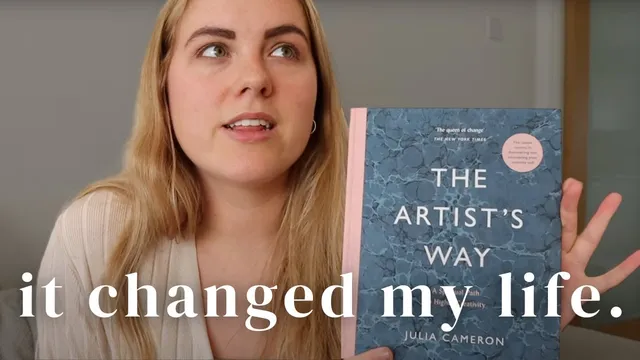
How to be Creative - The Artist's Way
Based on Ciara Feely's video on YouTube. If you like this content, support the original creators by watching, liking and subscribing to their content.
The Artist Way’s core routine pairs daily morning pages (three A4 pages of stream-of-consciousness) with a weekly solo artist date to protect creative play.
Briefing
Creativity becomes easier to sustain when it’s treated like a daily practice for clearing mental clutter and a weekly ritual for protecting “play” time—rather than something reserved for when life is calm. At 28, after nearly a decade in academia pursuing advanced degrees, Ciara Feely describes a personal identity crisis: years of optimizing for intelligence and credentials left her unsure she wanted the life she’d built. Rediscovering creative joy—through acting classes, workshops, and especially content creation—has brought more happiness than her achievement-focused routine, even when it’s emotionally messy.
Her anchor is Julia Cameron’s The Artist Way, a 12-week program built around two recurring components: morning pages and the artist date. Morning pages ask for three A4 pages of stream-of-consciousness writing first thing each morning, ideally after setting an alarm about 30 minutes early. Feely frames the practice as “clearing the decks”: dumping worries, to-do lists, and stressors onto paper so there’s room for creativity later. She stresses that the pages aren’t about writing well or producing profound insights; they’re about volume and honesty. Some days yield a full overflow of thoughts; other days feel empty, and the instruction is to keep writing anyway until something shifts. She also recommends privacy—avoiding reading the pages (and especially not letting others read them) for the first couple of months—because early writing can be raw, reflective, and emotionally revealing.
The second practice, the artist date, is a scheduled weekly block of time devoted to nurturing an inner artist through activities that inspire and delight. The only rule: go alone. Feely links the idea to “breakout blocks” from the 12-week year concept and to habit-stacking from Atomic Habits: morning pages are easy because they’re built into waking up, while artist dates require decision-making and can be sacrificed during busy periods. She describes how she’s struggled to protect this time—often feeling she doesn’t “deserve” it—then found a way through by treating the inner artist as a child who needs permission to play. Her artist dates have ranged from buying sketching supplies and temporary tattoos at an arts-and-hobby shop to drawing, taking a solo lunch break in a new park, watching clouds, listening to music and dancing, and exploring Dublin neighborhoods.
Beyond the practices, Feely walks through the book’s 12-week themes, which move from dismantling self-criticism and fear (safety, identity, power, integrity) toward building positive capacity (possibility, abundance, connection, strength, compassion, boundaries, autonomy, faith). She highlights how anger and jealousy can signal unmet desires, how “answered prayers” can be scary because they require action, and how scarcity mindsets can block creative continuity. The program also encourages selective focus: spend extra time on exercises that trigger resistance, since that’s often where the real work sits.
For Feely, the biggest surprise is that the process isn’t limited to acting. It expands creativity into drawing, poetry, and content creation—while also challenging the performative pressure of chasing views and subscribers. She warns that sharing work too early can intensify self-doubt, especially in a media environment built around external validation. Looking ahead, she’s planning a five-week artist sabbatical in London for full-time Shakespeare performance training, hoping the structure and themes of The Artist Way will help her keep creating even when opportunities feel uncertain. The central takeaway is practical: protect time for private creative work, clear mental noise daily, and treat play as a non-negotiable part of becoming who you are.
Cornell Notes
Julia Cameron’s The Artist Way is presented as a 12-week method for rebuilding creativity by combining two repeatable rituals: morning pages and the artist date. Morning pages require three A4 pages of stream-of-consciousness writing first thing each morning to clear worries and make mental space for creative work later. The artist date is a weekly, solo block of time devoted to activities that inspire and delight—an adult version of play that protects creative energy from busy schedules and self-judgment. Feely connects the program’s themes (safety, identity, power, integrity, possibility, abundance, connection, strength, compassion, boundaries, autonomy, faith) to real creative blocks like scarcity mindset and fear of being judged. The approach matters because it shifts creativity from performance and external validation toward private exploration and sustainable practice.
What exactly are morning pages, and why does Feely treat them as more than journaling?
How does the artist date work, and what makes it different from typical self-care?
Why does the book’s structure matter—how do the weekly themes build on each other?
How does Feely connect creativity to productivity systems like GTD and habit stacking?
What does Feely say about sharing creative work too early?
How does the program address scarcity mindset and fear of future opportunities?
Review Questions
- How do morning pages function as a mental “clutter clearing” practice, and what does Feely say to do on days when writing feels empty?
- What is the single rule of the artist date, and how does Feely’s experience show why that rule matters?
- Which weekly themes in The Artist Way correspond to rebuilding self-belief, and how does the program’s sequence move from negative forces to positive creative strength?
Key Points
- 1
The Artist Way’s core routine pairs daily morning pages (three A4 pages of stream-of-consciousness) with a weekly solo artist date to protect creative play.
- 2
Morning pages are meant to clear worries and to-do lists, not to produce polished writing or “profound” insights.
- 3
Privacy is part of the practice: Feely recommends not letting others read morning pages early on and avoiding frequent re-reading of recent pages during the most emotionally raw period.
- 4
The artist date is hard to maintain when life is busy because it requires permission and a decision; habit-stacking ideas (like attaching it to a lunch break) can help.
- 5
The 12-week structure is designed as a progression—from safety and identity through power, integrity, possibility, abundance, connection, strength, compassion, boundaries, autonomy, and faith.
- 6
Anger and jealousy can be interpreted as signals of unmet creative desires, and “answered prayers” can be scary because they demand action.
- 7
Feely argues that early sharing of creative work can intensify self-doubt, so creators may need a period of private exploration before seeking feedback or visibility.