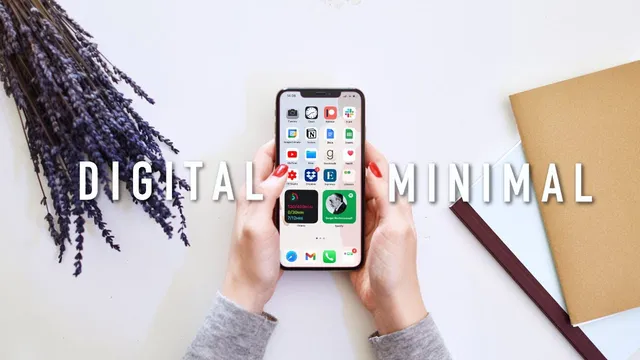
how to be more mindful and productive with digital minimalism
Based on Mariana Vieira's video on YouTube. If you like this content, support the original creators by watching, liking and subscribing to their content.
Digital minimalism treats social media engagement as an attention-reward loop driven by intermittent positive reinforcement, not just a user discipline problem.
Briefing
Digital minimalism centers on a blunt idea: phone and social media “clutter” isn’t mainly a settings problem—it’s a design-and-reward problem. Technology and social platforms keep people engaged through intermittent positive reinforcement (likes, hearts, notifications, comments), which trains attention to chase social approval. Quick fixes like disabling notifications or hiding apps can reduce friction, but Cal Newport’s approach treats them as superficial unless they’re backed by a deeper philosophy of how technology should fit into life.
That philosophy of technology use is the core framework. A digital minimalist intentionally limits online time to a small set of carefully chosen activities that directly support what matters, then accepts the trade-off of missing out on everything else. Newport’s “more can be less” principle pushes the same logic further: the real cost of extra profit or connection is time and attention—resources that must be spent deliberately. Chasing occasional novelty (for example, through constant social feeds) can be a poor exchange if it drains the hours needed for deeper work, meaningful relationships, or creative pursuits.
Instead of gradual habit tweaks, Newport recommends a structured reset: a 30-day digital declutter. During the break from optional technologies, people rediscover satisfying, meaningful activities—often ones that were crowded out by constant scrolling. After the month, each technology is reintroduced from a blank slate, with clear questions: What value does it serve? Is it the best tool for supporting a deeply held priority? This process aims to restore awareness of what people genuinely enjoy, including the ability to tolerate boredom and solitude without reaching for a device.
The transcript highlights what’s been lost in many modern routines: solitude, boredom, and high-quality leisure. When a phone is always available, people rarely sit with their own thoughts, which can dull reflection and weaken connection to the surrounding environment and other people. Two practical habits are offered to rebuild that mental space—leaving the phone at home more often and taking long walks—both framed as ways to regain attention, perspective, and a calmer sense of self.
Technology still has a role, but it should act as a subordinate support tool rather than the main driver of life. The transcript suggests scheduling low-quality leisure in advance, and even moving social media off the phone (for example, using a computer instead) to reduce impulsive checking. It also stresses that the goal isn’t guilt-free abstinence; it’s avoiding “hostage” behavior—staying only with tools that add real joy or value.
Personal practice is used to illustrate the principles: the creator deleted most social media in 2020, relying mainly on YouTube for curated learning and entertainment. The takeaway is a practical manifesto—declutter, reflect, reintroduce intentionally, and then walk away from anything that no longer earns its place in daily life.
Cornell Notes
Digital minimalism treats social media and smartphones as attention traps powered by intermittent rewards like likes, hearts, and notifications. Cal Newport’s approach emphasizes a “philosophy of technology use”: choose a small number of online activities that strongly support personal values, and accept missing out on the rest. Instead of minor tweaks, he recommends a 30-day digital declutter to rediscover meaningful activities and rebuild tolerance for boredom and solitude. After the break, each optional technology is reintroduced from a blank slate by asking what value it provides and whether it’s the best tool for that value. The aim is to keep technology in a subordinate role—use it when it helps, and leave it when it doesn’t.
Why does digital minimalism focus less on app settings and more on technology design and behavior loops?
What does a “philosophy of technology use” require in practice?
How does the 30-day digital declutter work, and what happens after it ends?
Why are boredom and solitude treated as important outcomes of digital minimalism?
What does “more can be less” mean in the context of attention and connection?
How can technology remain useful without becoming the main driver of life?
Review Questions
- What specific questions should guide reintroducing an optional technology after a digital declutter?
- How do intermittent positive reinforcement mechanisms (likes, hearts, notifications) contribute to compulsive checking?
- Which practices in the transcript are meant to restore solitude and boredom, and why are those states valuable?
Key Points
- 1
Digital minimalism treats social media engagement as an attention-reward loop driven by intermittent positive reinforcement, not just a user discipline problem.
- 2
A “philosophy of technology use” requires choosing a small set of online activities that directly support personal values while intentionally skipping the rest.
- 3
Newport’s “more can be less” reframes connection and novelty as costly when time and attention are treated as the real currency.
- 4
A 30-day digital declutter helps people rediscover meaningful activities and rebuild tolerance for boredom and solitude before reintroducing tools.
- 5
Reintroducing technology should start from a blank slate and be guided by two questions: what value it provides and whether it’s the best way to support that value.
- 6
Mindful use can include scheduling low-quality leisure and reducing impulsive access by moving social media off the phone.
- 7
The goal is not guilt-free abstinence; it’s avoiding “hostage” behavior by keeping only tools that add real joy or value.