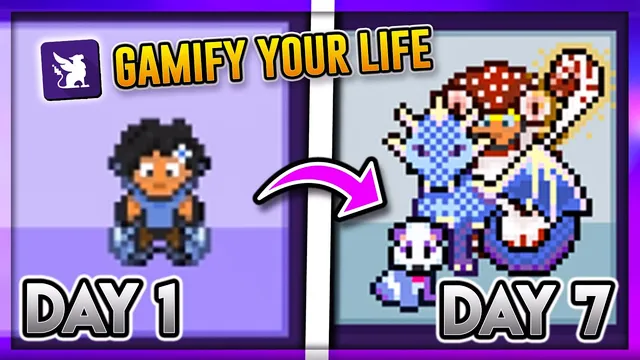
I Gamified My Life For A Week using Habitica
Based on John Mavrick Ch.'s video on YouTube. If you like this content, support the original creators by watching, liking and subscribing to their content.
Habitica’s to-dos, dailies, and habits worked best when mapped to a real schedule: dailies for daily structure and to-dos for filling spare work/break time.
Briefing
Habitica’s biggest payoff in a week-long trial wasn’t just points—it was turning a messy, finals-week schedule into a structured daily rhythm using three distinct task types: to-dos, dailies, and habits. The user started out feeling disorganized while juggling projects and studying, then built a system that mapped work blocks and break blocks to specific tasks. Completing dailies became the main “stay on track” mechanism, while to-dos filled in smaller gaps during the day, and habits tracked ongoing behaviors like whether breaks were productive or procrastinated.
The setup process leaned on existing planning habits rather than replacing them. A weekly review in Obsidian was used to generate actionable steps, which were then categorized inside Habitica. Each morning, dailies served as the day’s plan, and to-dos were used to occupy extra time during work or break sessions. When switching between work and break, the user updated Habitica in real time—checking off completed items and logging habits—then refined task difficulty and cleaned up “dusty” tasks at week’s end.
Gamification landed more slowly than expected, but it eventually clicked. Early on, the user wasn’t “entranced” by the game layer, yet the loop of earning gold and experience provided a steady incentive to follow through. Habitica also prompted reflection on real-life consequences: rewards weren’t only in-game, they nudged the user to think about what completing tasks meant outside the app. Over time, the character’s leveling made progress feel tangible, and the ability to discuss features and items with a friend added social motivation.
The trial also highlighted how Habitica’s mechanics change behavior. To-dos don’t punish immediately if missed; older to-dos can yield more rewards when completed late, reducing the fear of falling behind. Dailies build rewards through streaks, but rewards can also drop as the activity becomes routine. There’s also flexibility: if a daily is done late at night, it can sometimes be checked the next day. The user used this structure to address a key pain point—dates on to-dos felt like decoration—by creating a daily to force real progress.
Beyond workflow, the user explored deeper systems: tags for work vs. break tasks, difficulty levels that can effectively weight the consequence of missing or completing tasks, and rewards spending decisions (real-life vs. in-game). They also encountered a potential exploit—spamming task toggles to repeatedly gain eggs—raising the risk of an “infinite money” style glitch, though they chose not to abuse it.
By the end of the week, the user reached level 7 and beat the “feral dust bunnies,” then started a new quest type focused on finding things through tasks. They still wanted improvements: more robust guild features than a chat-board-only setup, richer boss rewards, and custom lists driven by tags or other criteria. Even with those gaps, Habitica’s mix of simple organization and game-like reinforcement proved effective enough to replace a prior approach (Todoist) and make daily planning feel more seamless.
Cornell Notes
Habitica turned a chaotic week into a repeatable system by organizing life into three categories: to-dos, dailies, and habits. The user built the plan from a weekly Obsidian review, then used dailies each morning as the day’s structure while to-dos filled extra time during work and break sessions. Gamification became more motivating over time through gold/XP rewards, streak mechanics, and the way task completion connects to real-life outcomes. The app also reduced anxiety about missing tasks because to-dos don’t immediately “hurt” when completed late, and older to-dos can pay more. By week’s end, the user reached level 7, beat the feral dust bunnies, and refined difficulty and habit tracking to better match their schedule.
How did the user translate real goals into Habitica tasks each week and each day?
What behavioral effect came from Habitica’s streaks and timing rules?
Why did tags matter for work vs. break sessions?
What did the user learn about Habitica’s gamification beyond motivation?
What exploit did the user notice, and why does it matter?
What improvements did the user want after a week of use?
Review Questions
- How did the user’s Obsidian weekly review feed into Habitica’s daily planning workflow?
- What differences in reward behavior between to-dos and dailies reduced the fear of falling behind?
- Which Habitica mechanics (tags, difficulty levels, stats/equipment, streaks) most directly changed the user’s day-to-day behavior?
Key Points
- 1
Habitica’s to-dos, dailies, and habits worked best when mapped to a real schedule: dailies for daily structure and to-dos for filling spare work/break time.
- 2
A weekly review in Obsidian provided the raw goals, which were then converted into Habitica tasks and updated throughout the day.
- 3
Streak mechanics and timing rules reduced anxiety: to-dos can pay more when older, while dailies reward streaks but allow some late-night flexibility.
- 4
Tags helped the user quickly choose tasks appropriate for short break windows versus focused work blocks.
- 5
Difficulty levels can function like consequence weights, letting missing or completing tasks carry different “costs.”
- 6
Gamification became more motivating over time through gold/XP rewards and the way completion encouraged reflection on real-life outcomes.
- 7
The user noticed a potential eggs exploit via spamming task toggles, highlighting the importance of avoiding reward-abuse.