May 2022 Monthly Reset - Monthly Reflection, Planning and Goal Setting as a PhD Student
Based on Ciara Feely's video on YouTube. If you like this content, support the original creators by watching, liking and subscribing to their content.
May’s central theme is building an intentional, happier routine around PhD work after April’s emotional ups and downs.
Briefing
Ciara Feely’s May reset centers on a simple pivot: after an up-and-down April marked by post-goal “calm down,” anxiety spikes, and a heavy workload, May is being planned around intentional happiness—while still meeting pressing PhD and drama-school deadlines. The month’s biggest emotional takeaway comes from a trip to Italy in April, which Feely describes as “life-giving” and as a practical reminder that travel can directly fuel academic momentum. During the trip, she kept working on her PhD on an iPad—writing a strong first draft of one paper and an introduction for another—then returned to her research without friction. That experience sharpened her sense of what she values and helped set May’s focus: build a more “intentional happy life” alongside graduate-school responsibilities, including mental-health-focused content for PhD students.
April’s start was low. After completing a 12-week period of goals and posting a recap video, she felt overwhelmed by the prospect of starting again and lacked excitement because another holiday was coming almost immediately. Even so, April ended up improving. Highlights included time with friends—meals and hikes—plus a birthday dinner in Dublin at Fire for Jack. She also credits the Italy trip with reigniting her motivation for her academic career, especially the idea that she can combine enjoyment with productivity.
On the work front, April was dominated by PhD output and wrap-up pressure. She’s submitting a paper on Sunday and working on another that is unlikely to finish by Wednesday, with class deadlines pushing tasks into the next week. She notes that once class work ends, the schedule should ease: fewer deadlines and more breathing room. Beyond research, she helped with drama-school responsibilities (including end-of-term wrap-up), delivered a talk for National Poetry Day on Shakespearean sonnets—nerve-wracking due to limited promotion and being in-person again after a long gap, but ultimately successful—and is looking ahead to a higher-level creative role rather than day-to-day management.
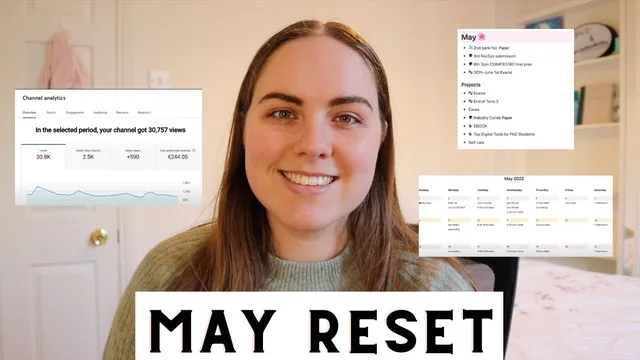
Her brand and content metrics show a dip. In April, she posted three videos and logged about 30,000 views, roughly 2,500 watch hours, and 573 subscribers—lower than recent months. Ad earnings were modest (about €235), and she avoided sponsored videos in April to reduce stress after doing two in March. For May, she wants a steadier sponsorship rhythm (one YouTube sponsor at minimum, plus Instagram options), more Instagram activity, and a more strategic YouTube plan including two evergreen videos.
May’s planning is structured around categories: PhD deliverables (conference paper submission and returning to a long-running journal paper), a “money reset” after overspending on holiday and birthdays, drama-school business goals (promoting summer courses and filming online classes), and personal health and mental health routines (daily exercise, a low-anxiety food plan, decluttering, and a possible trip to Galway). The calendar outlook is unusually calm: after a cluster of deadlines in early May, she expects a three-week stretch with no major key dates until May 30—an opening she’s treating as a chance to rebuild momentum and joy without constant fire drills.
Cornell Notes
April delivered a mix of exhaustion, anxiety, and motivation—then ended on a high note thanks largely to an Italy trip that Feely says directly boosted her PhD drive. May’s reset turns that insight into a plan: build an “intentional happy life” around graduate-school work, with mental-health-focused content for PhD students and routines aimed at lowering anxiety. The month’s priorities are concrete—submit a conference paper, finish a journal paper, wrap up classes, and push drama-school projects like filming online courses. On the personal and financial side, she plans a money reset after overspending and sets goals for exercise, a low-anxiety diet approach, and decluttering. Content strategy also shifts toward consistency and evergreen planning to stabilize growth.
What changed in Feely’s thinking after April, and how does it shape May’s priorities?
Why did April feel emotionally difficult at the start, even though major goals were completed?
What are the most time-sensitive academic deliverables in May?
How does May’s schedule differ from earlier months, and why does that matter to her planning?
What does Feely plan to change about her content and sponsorship approach?
What practical personal goals does she set for May that connect to mental health?
Review Questions
- Which April event does Feely credit with reigniting both her enjoyment of travel and her PhD productivity, and what specific work did she complete while away?
- What are Feely’s top PhD deadlines for early May, and how does she expect the schedule to change after class wrap-up?
- How does Feely connect mental health to both daily routines (exercise/food) and stressors like finances and content workload?
Key Points
- 1
May’s central theme is building an intentional, happier routine around PhD work after April’s emotional ups and downs.
- 2
The Italy trip in April is treated as a practical proof that enjoyment and academic productivity can reinforce each other.
- 3
Early May is dominated by conference submission and continued work on delayed papers, with class wrap-up expected to reduce deadline pressure.
- 4
Feely plans a “money reset” because holiday and birthday spending left her finances in a mess and she wants to reduce stress from uncertainty.
- 5
Drama-school priorities for May include promoting summer courses and filming online classes, alongside finishing end-of-term responsibilities.
- 6
Content strategy shifts toward consistency and growth: more Instagram posting, at least one YouTube sponsor, and two evergreen YouTube videos.
- 7
Her May calendar outlook includes an unusually calm stretch with no major key dates until May 30, creating space for mental health routines and long-term projects.