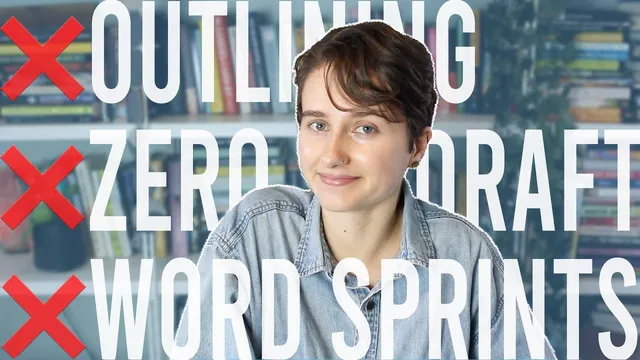
Popular Writing Methods I Don't Use (+ alternatives to try!)
Based on ShaelinWrites's video on YouTube. If you like this content, support the original creators by watching, liking and subscribing to their content.
Full outlining often flattens discovery-based drafting by limiting the “richness” that emerges during scene creation.
Briefing
A common writing “productivity” and “planning” toolkit doesn’t fit everyone—especially writers who create best by discovering story on the page. Jaylen’s core claim is that several widely recommended methods (full outlining, character profiles, zero drafting, writing sprints, word-count quotas, and big-to-small editing) can actively flatten creativity or disrupt focus. The fix isn’t to abandon structure or discipline, but to swap in alternatives that preserve intuition, flow, and scene-level discovery.
Outlining is the first practice that doesn’t work for her. Planning scenes and events in advance tends to box in the “richness” that emerges during drafting, leading to flatter stories. She distinguishes her preferred approach from “pure discovery writing,” arguing that discovery writers still have direction—they just let the story’s shape remain fluid until it solidifies through drafting. For writers who want something less rigid than full outlining, she offers middle-ground systems. One is an informational outline: instead of mapping plot beats, she outlines what must be revealed, then drafts scenes to discover how that information comes out naturally. For a nonlinear project, she breaks the work into six parts across three timelines (fictive present, backstory, and a frame), filling in information rather than pre-assigning events. Another is “nested arcs,” an internal-structure method that treats the book as overlapping arcs—overall parts/acts, sub-arcs, and chapter arcs—so pacing stays controlled without relying on external plot templates. A third option is micro outlining: outline a small cluster of short chapters (four to five at a time), draft them, then outline the next cluster—allowing the story to be reshuffled as it grows.
Character profiles also fall short for her. She sees them as concrete but incomplete: filling out birthdays, jobs, and physical traits doesn’t automatically create autonomous, fully lived internal lives. Instead, she recommends test scenes and character interviews. Test scenes let a writer observe voice and behavior before committing to the final story. Character interviews go further by having the character answer questions in first person, aiming for “relentless specificity” and drawing out opinions, anecdotes, and fears. She also mentions the PR questionnaire as a similar exercise worth trying.
Fast drafting (zero drafting) and writing sprints don’t match her process either. She can’t write broad sketches quickly because her brain works “small detail outwards,” requiring fully fleshed scenes from the start. Her alternative is slow drafting or a three-stage cycle: draft for a month, rest for two weeks, then edit for two weeks before drafting again. For sprints, she argues the timer interrupts flow state; her substitute is “romanticized drafting,” where the session length follows immersion rather than a stopwatch.
Finally, she rejects word-count goals and big-to-small editing. Word-count targets can turn writing into an assignment and pull attention away from story. She prefers project-based blocks with loose deadlines, scene goals instead of word quotas, or frequency goals (writing every day or a set number of days, regardless of output). For editing, she avoids starting with “big” structural changes in isolation. Instead, she edits chronologically, making big/medium/small changes together as she moves through chapters, then revisits lingering larger issues once the whole draft is understood. The throughline: experiment until the method supports how your creativity actually works—then build a system that keeps that advantage intact.
Cornell Notes
Jaylen’s writing process centers on discovery and flow, and several mainstream methods don’t fit that style. Full outlining often produces flatter stories because it limits the “richness” that emerges while drafting. For structure without rigidity, she recommends informational outlining (outline what information must be revealed, not the plot beats), nested arcs (track overlapping arcs at multiple levels), and micro outlining (outline and draft in small batches). For character development, she finds character profiles too shallow and favors test scenes and character interviews answered in first person with detailed specificity. For drafting and productivity, she avoids zero drafting, sprints, word-count quotas, and big-to-small editing, replacing them with slow or staged drafting, flow-friendly sessions, scene/project goals, and chronological editing.
Why does full outlining tend to backfire for a discovery-oriented writer, and what alternative preserves discovery?
What does “nested arcs” mean, and how does it help pacing without using plot templates?
How does micro outlining work as a compromise between outlining and pure discovery?
What’s the difference between character profiles and character interviews in her approach?
Why does she avoid writing sprints and word-count goals?
How does her editing method differ from the common “big to small” approach?
Review Questions
- Which specific alternative does Jaylen recommend when you want structure but don’t want to pre-plan plot beats, and how does it work for nonlinear timelines?
- How do nested arcs differ from beat-sheet plot structures, and what levels of arcs does Jaylen say you can track?
- What editing approach does Jaylen use to avoid confusion from big-to-small editing, and why does she believe it reduces disorientation?
Key Points
- 1
Full outlining often flattens discovery-based drafting by limiting the “richness” that emerges during scene creation.
- 2
Informational outlining keeps structure by mapping what must be revealed, not the exact plot beats or events.
- 3
Nested arcs provide pacing control through overlapping arcs (book → parts/acts → sub-arcs → chapters) without relying on external beat templates.
- 4
Character profiles can be fact-heavy but development-light; test scenes and character interviews (first-person, highly specific) better generate believable internal lives.
- 5
Zero drafting and writing sprints can fail for writers who need detailed, scene-level immersion from the start or who rely on flow state.
- 6
Replace word-count quotas with scene goals, project-based blocks, or frequency goals (e.g., writing every day) to keep attention on story rather than metrics.
- 7
Edit chronologically and make big/medium/small changes together, since structural moves create cascading micro edits that are easier to place in order.