The Areas of Focus List - Quarterly Planning Advice
Based on Ciara Feely's video on YouTube. If you like this content, support the original creators by watching, liking and subscribing to their content.
Build an “areas of focus list” that inventories current responsibilities across business, other work, personal life, and relationships/pets before setting new goals.
Briefing
Quarterly planning starts with a reality check: list every current “area of focus” and treat existing commitments as constraints, not obstacles. The core tool is an “areas of focus list,” a running inventory of responsibilities across work and life. That list matters because goal-setting often fails when new targets ignore what’s already scheduled—leading to the feeling that progress is missing even when time is simply being spent on obligations that were never accounted for.
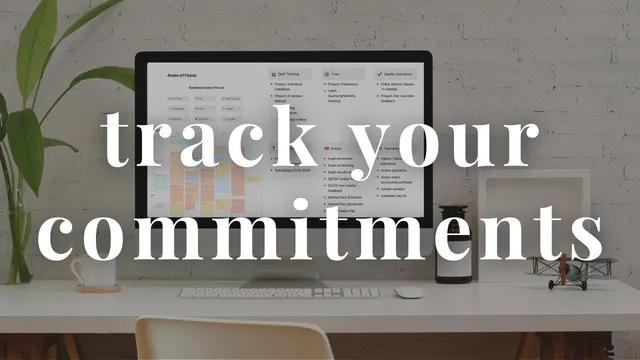
The planning system begins by building a comprehensive list of responsibilities, then organizing it into four broad categories: the business, other work, personal, and relationships/pets. The business category is broken down into sub-areas such as staff training, venues/classes, events, financial routines, office space, and social media. Other work includes research, teaching, and lecturing. Personal covers habits and well-being routines, while relationships/pets capture commitments outside professional life. With that map in place, the next 12 weeks become a matter of choosing what must be completed now versus what can roll into later quarters.
In the business plan for the coming 12-week cycle, the highest priority is staff training—specifically delivering individual feedback to all staff. That project requires attending classes for each teacher, writing structured feedback notes (since feedback can’t be improvised in meetings), and tracking what’s been said so improvements can be reviewed later. A second staff-related project is updating the employee handbook, including teaching resources and teaching videos, though it may slip to the next quarter due to time limits.
Other business priorities are staged around the academic calendar and operational needs. Under venues/classes, the plan includes promoting underperforming classes and eventually closing others, plus scheduling for the next term. Events are treated as a set of major deliverables: speech and drama exams (broken into enrollment, scheduling, and results delivery), Fesh finals (prep plus feedback for those who didn’t make it), and an in-house Fash that requires enrollment and planning materials. Financials run on monthly habits—uploading receipts, following up on payments, reviewing payments, checking online accounting software, and completing payroll.
Office logistics also get their own project list: moving books between locations, ensuring shelving is safely secured, clearing and shredding, arranging professional cleaning, building storage solutions, and eventually decorating. Meanwhile, the current term includes sending enrollment information, ensuring staffing is in place, weekly staff meetings, weekly class planning, and creating a new spreadsheet for the coming term.
After listing projects, the next step is task planning: convert each project into concrete sub-tasks. Exam enrollment illustrates the approach—create a final grade-level spreadsheet, draft and send grade-specific emails, track confirmations and payments, decide on payment methods, follow up with non-responders, and coordinate with staff. To manage overwhelm, priorities are marked with stars for items that require extra effort.
Finally, the plan becomes a schedule. Habits are grouped into times of day using habit stacking from Atomic Habits: a morning block (journaling, meditation, gratitude, highlights, exercise, and personal tasks), plus weekly anchors like yoga and staff meetings. Work blocks are assigned by weekday—admin-heavy Mondays, project and research time midweek, teaching and staff meeting on Thursdays, and YouTube work on Friday mornings—while weekends handle venues, exercise, and personal time. The schedule stays “loose,” with specific date exceptions, and includes intentional grace during weeks that are likely to be disrupted by weddings, travel, and family commitments.
Cornell Notes
The planning method centers on an “areas of focus list,” a master inventory of responsibilities across business, other work, personal life, and relationships/pets. Keeping that list prevents a common goal-setting mistake: adding new goals without accounting for existing commitments, which leads to unrealistic expectations and misplaced guilt. Once priorities are identified, each project is broken into tasks (e.g., exam enrollment becomes spreadsheets, grade-specific emails, tracking confirmations, payment follow-ups, and staff coordination). The final step is scheduling habits and work blocks week by week, using habit stacking (from Atomic Habits) to group routines into consistent time windows while allowing “loose” schedules with date-specific exceptions. This approach turns a 12-week cycle into manageable, reality-based execution.
Why does an “areas of focus list” come before setting goals for a new quarter?
How are responsibilities organized so the list stays usable?
What makes staff training the top business priority in the next 12-week cycle?
How does the plan handle complex events without turning them into a messy catch-all?
What does “project planning” look like at the task level?
How are habits and work blocks scheduled without requiring a rigid daily routine?
Review Questions
- What problem does the areas of focus list solve in goal-setting, and how does it change what gets prioritized?
- Choose one business project (e.g., exams, staff training, or office space). What are the key sub-tasks that would need to be planned?
- How does habit stacking influence the way daily routines are scheduled across the week?
Key Points
- 1
Build an “areas of focus list” that inventories current responsibilities across business, other work, personal life, and relationships/pets before setting new goals.
- 2
Use existing commitments as constraints when deciding what’s realistic for the next quarter or 12-week cycle.
- 3
Break each project into concrete tasks and track dependencies (spreadsheets, emails, scheduling, feedback delivery, and follow-ups).
- 4
Stage priorities: complete the highest-impact items first and roll lower-capacity projects into the next quarter when time is tight.
- 5
Mark higher-effort priorities (e.g., with stars) to prevent the plan from becoming a flat, equally-weighted to-do list.
- 6
Create a loose weekly schedule that assigns work blocks by weekday while grouping habits into consistent time-of-day routines using habit stacking.
- 7
Plan for exceptions and protect recovery time by allowing “grace” during weeks disrupted by events, travel, or family commitments.