The *Huge* Problem With Timeblocking: What I Do Instead
Based on FromSergio's video on YouTube. If you like this content, support the original creators by watching, liking and subscribing to their content.
Timeblocking fails when it treats every hour as equally productive; energy and focus vary across the day and across days.
Briefing
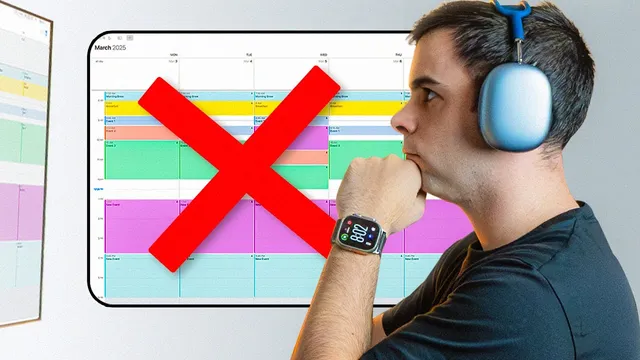
Timeblocking fails when it treats every hour—and every day—as if the brain’s energy were constant. The core problem isn’t scheduling itself; it’s the mismatch between rigid calendar blocks and real fluctuations in alertness, focus, and motivation. When tasks overrun their allotted time, momentum gets interrupted, or an unexpected obligation forces a reset, people often interpret the outcome as personal failure rather than a predictable consequence of energy management.
A better approach starts with “biological prime time”: the daily window when someone is most alert, focused, and creative. Cognitive performance doesn’t stay static across the day, so the “hard things first” advice only works if everyone’s peak lines up. For some people it’s morning; for others it’s late night or somewhere in between. The practical takeaway is to reserve prime time for high-demand work—creative production, important meetings, video editing—while using lower-energy periods for maintenance tasks like email, accounting, and errands. Instead of assigning a fixed time slot to every task, tasks get ranked by priority (one, two, three). Priority One work happens only during peak hours; priorities two and three get scheduled outside those windows. This structure aims to align output with natural energy cycles rather than forcing effort at the wrong moment.
Rigid timeblocking also breaks down when work requires flow. Inspiration and deep focus don’t switch on and off neatly at arbitrary boundaries, and even small interruptions can derail productivity. Task switching—such as being pulled out by Slack or WhatsApp—can cost significant focus and take time to recover. To reduce that friction, the transcript points to Apple’s Focus modes as an automated way to control notifications by context: during work peak hours, only messages from selected people come through, personal email is silenced, and distracting apps like Twitter are disabled. Separate Focus modes can trigger for specific activities (workouts, meditation) and for downtime, where work notifications are blocked after hours.
Finally, the transcript argues that “rest” often isn’t rest. Reaching for social media during breaks may feel like downtime but can keep dopamine-driven attention active, leaving people more tired and less able to return to the task. The suggested alternative is low-stimulation recovery—meditation, walking, music, exercise, or reading—plus the claim that creative breakthroughs often arrive when the mind is relaxed rather than actively forcing ideas.
For creative work, the approach leans into slower iteration. Instead of completing a task in one long sprint, it’s broken into smaller daily sessions across multiple days, preserving quality while still totaling the same hours. The broader message is a rejection of quantity-at-all-costs productivity culture: chasing more output can harm health, increase mental strain, and ultimately reduce long-term effectiveness. The emphasis shifts from doing more to doing better—by protecting prime time, managing interruptions, taking genuinely restorative breaks, and letting ideas develop at a pace that matches human energy.
Cornell Notes
Timeblocking breaks down because energy and focus vary across the day and across days. A more reliable system uses “biological prime time” to schedule demanding work only during peak alertness, while lower-effort tasks go into off-peak hours. Tasks are prioritized (1–3) rather than assigned to exact time slots, reducing the feeling of failure when reality disrupts plans. The transcript also recommends controlling interruptions with Apple Focus modes, using low-stimulation breaks instead of social media, and spreading creative work across multiple days to improve quality. The result is a workflow built around energy management and sustainable output rather than rigid, hour-by-hour control.
Why does timeblocking often backfire, even when the calendar looks perfect?
What is “biological prime time,” and how should it change task scheduling?
How does prioritizing tasks (1–3) reduce the stress of rigid time blocks?
Why are notifications treated as more than minor interruptions?
What makes a “real break” different from scrolling social media?
Review Questions
- How would you redesign a timeblocked day if your peak alertness occurs in the afternoon rather than the morning?
- What specific mechanisms (priority ranking, Focus modes, break selection) address the transcript’s main productivity failures?
- Why does spreading creative work across multiple days improve quality, even if total hours stay the same?
Key Points
- 1
Timeblocking fails when it treats every hour as equally productive; energy and focus vary across the day and across days.
- 2
Use “biological prime time” to schedule demanding, high-cognitive tasks, and reserve off-peak hours for maintenance work.
- 3
Replace fixed time slots with priority levels (1–3) so plans remain workable when interruptions or delays happen.
- 4
Reduce attention loss from notifications by using Apple Focus modes to automate which alerts come through during work, activities, and downtime.
- 5
Take breaks that are low in cognitive stimulation; social media scrolling is framed as dopamine-driven stimulation rather than true recovery.
- 6
For creative output, break work into smaller daily sessions across multiple days to allow ideas to evolve and improve quality.
- 7
Challenge quantity-first productivity culture by prioritizing sustainable energy management and mental well-being over constant output.