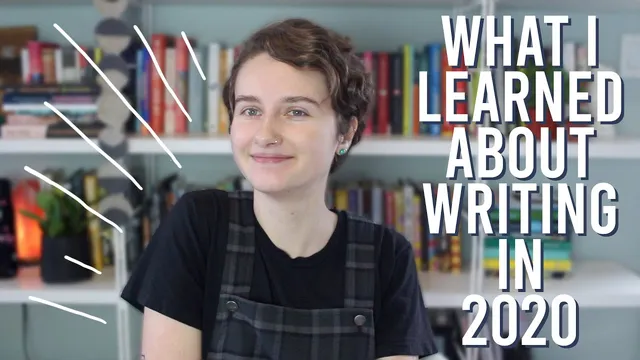
What I Learned About Writing in 2020!
Based on ShaelinWrites's video on YouTube. If you like this content, support the original creators by watching, liking and subscribing to their content.
Drafting slowly became Jaylen’s preferred approach after an 18-month novel draft made immersion feel like the best part of writing.
Briefing
Writing in 2020 became less about chasing productivity and more about protecting the parts of the process that make drafting feel alive. After finishing a novel that took 18 months to draft, Jaylen concluded that writing slowly isn’t a compromise—it’s a joy. The “messy first draft” mindset didn’t fit, and the most satisfying work turned out to be the drafting itself: immersing in the story, indulging in it longer, and treating completion as a byproduct rather than the goal.
That shift fed into a broader philosophy: editing isn’t a punishment, and mistakes aren’t detours. Editing, in this view, doesn’t exist because the first attempt failed; it exists because revision can add depth that perfect drafting would never create. When Jaylen spent much of the year revising a novel finished in March, many changes traced back to earlier issues—plot holes, underdeveloped elements, things that “didn’t make sense.” Instead of merely fixing problems, those errors opened space for new layers of story. The result was a noticeable reduction in perfectionism: if mistakes can improve the book, then “getting it wrong” early becomes part of the path to something better.
Trusting intuition also became a practical rule. When a small internal prompt suggested a different approach—something “drastic” compared to the original plan—Jaylen found that waiting and second-guessing for weeks often confirmed the instinct. A major example was restarting a book after starting it in March. The draft wasn’t hated, just oddly neutral, and a long-held idea to change the form and style kept resurfacing. The decision to restart reflected a belief that the questions being raised by the mind usually signal a real need.
Equally important was permission to stop. Jaylen described a former pressure to see everything through to submission and editing, even for short stories. In 2020, multiple pieces were discarded without guilt—an acknowledgment that time is precious and that moving on isn’t failure. The same mindset extended to audience approval: whether others like a book doesn’t determine its value. Jaylen argued that modern media culture often treats dislike as personal betrayal, but writing is ultimately about communicating the story the writer set out to tell.
Life after school also reshaped the definition of fulfillment. With community-driven workshops gone, Jaylen missed the regular practice of reading and editing other people’s work. Helping others became as integral to writing satisfaction as writing their own, and the absence of that support contributed to a post-grad sense of being unmoored.
Finally, Jaylen rejected common writing rhetoric that treats stories as adversaries and writing as something to conquer. The preferred framing is partnership: work with the story rather than fight it. Inspiration, too, came less from confidence and more from not knowing—curiosity, doubt, confusion, and the desire to discover what the story and characters are. The favorite novel Jaylen wrote, started in late 2018 and finished this year, was built without planning and grew out of that uncertainty. In the end, writing became a journey of exploration: letting the unknown guide the draft, and letting revision and mistakes deepen what emerges.
Cornell Notes
In 2020, Jaylen’s writing philosophy shifted from productivity and perfection toward patience, curiosity, and creative trust. Drafting slowly became the preferred method after an 18-month novel draft made immersion feel like the best part of writing. Editing was reframed as an opportunity to add depth—mistakes in the first draft often created openings for new layers rather than just problems to fix. Jaylen also emphasized listening to intuition, discarding work that isn’t worth the time, and not treating audience dislike as personal failure. The deepest fuel came from not knowing: confusion and doubt drove the most exciting writing, including a favorite novel created without planning.
Why did “writing slowly” become a central lesson in 2020?
How did Jaylen change the way editing and mistakes are understood?
What role did intuition play in major writing decisions?
What permissions did Jaylen give themselves about unfinished or disliked work?
How did community and helping others affect Jaylen’s writing life?
What does “writing as partnership” mean, and where does inspiration come from?
Review Questions
- Which specific experiences in 2020 led Jaylen to reject the “messy first draft” and perfectionism mindset?
- How does Jaylen connect mistakes in a first draft to deeper revision outcomes?
- What evidence does Jaylen give that not knowing (confusion/doubt) can be a stronger creative fuel than confidence?
Key Points
- 1
Drafting slowly became Jaylen’s preferred approach after an 18-month novel draft made immersion feel like the best part of writing.
- 2
Editing should be treated as a chance to add depth, not a punishment for failing to write perfectly the first time.
- 3
Mistakes in early drafts can create opportunities for new layers—fixing problems can also expand the story.
- 4
Intuition changes should be taken seriously when they keep returning, even if they feel drastic at first.
- 5
Writers don’t owe every draft a full revision cycle; discarding work that isn’t worth the time is legitimate.
- 6
Audience reactions don’t determine a book’s success; the goal is communicating the story the writer set out to tell.
- 7
Writing is best framed as partnership with the story, and inspiration often comes from confusion and not knowing rather than confidence.