Zeno's Paradox & The Quantum Zeno Effect
Based on PBS Space Time's video on YouTube. If you like this content, support the original creators by watching, liking and subscribing to their content.
The quantum Zeno effect predicts that sufficiently frequent observation can suppress transitions between discrete quantum states, effectively freezing the system in its starting state.
Briefing
Quantum mechanics offers a way to “freeze” certain transitions by repeatedly checking a system—an idea that echoes Zeno’s paradox about motion becoming impossible when time is chopped into instants. The quantum Zeno effect predicts that if a quantum system can occupy two discrete states and would normally transition between them, sufficiently frequent measurements can suppress that transition, effectively keeping the system pinned to its starting state. The implication is stark: observation doesn’t just reveal a quantum outcome; under the right conditions, it can change the system’s dynamics.
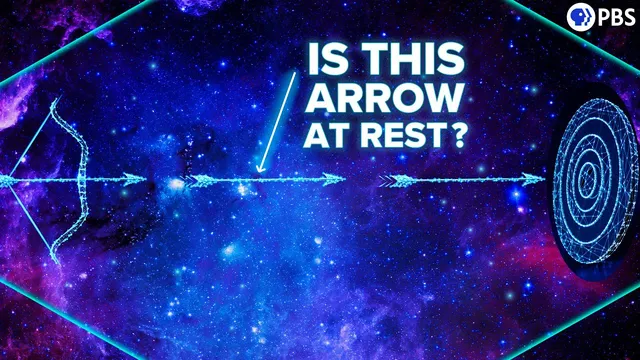
The transcript builds the intuition with a “quantum arrow” scenario. In Zeno’s original setup, an arrow appears not to move at any instantaneous snapshot, so it seems to remain at rest throughout flight. Modern physics treats each “instant” as a tiny time slice during which the arrow moves a tiny distance, and those tiny motions add up to real motion. Quantum mechanics, however, introduces a different lever: if the arrow’s position is quantized and the arrow exists in superposition between start and end, then repeated observation can repeatedly collapse the wavefunction back toward the start. In the thought experiment, keeping your eyes open—meaning continuously measuring—resets the evolving superposition again and again, making it increasingly unlikely for the system to reach the final state.
That conceptual picture motivated real experiments, most notably a 1990 claim by David Wineland and Wayne Itano and colleagues to halt electron energy transitions in laser-cooled atoms. The method uses a trap holding atoms and a radio-frequency field tuned to drive oscillations between two energy levels (labeled 1 and 2). A second laser pulse is then applied that couples level 1 to a third level (3). If the electron is in state 1 when the pulse arrives, it absorbs a photon and quickly returns to state 1 while emitting detectable light—so the atoms “glow.” If the electron is in state 2, the pulse doesn’t trigger absorption and the atoms remain dark. When the atoms start in state 1 and then receive a rapid sequence of such pulses, the probability of staying in state 1 increases as the pulse rate rises. A final pulse checks whether the atoms still glow, and the reported result is consistent with transition suppression.
Yet the effect’s status remains contested. A wave of papers after the 1990 report challenged whether the phenomenon truly comes from “measurement” in an abstract sense. Leslie Ballentine argued that the relevant driver is physical interaction: each laser photon perturbs the system, increasing the chance the electron “jiggles” back toward its initial state. In that view, a genuine Zeno-like freeze would require many photons—hardly a subtle measurement. More recent work from Washington University is cited for an “anti-Zeno effect,” where the same kind of perturbation can accelerate transitions instead of freezing them.
The transcript also frames the debate through interpretations of quantum mechanics. In Copenhagen, measurement collapses the wavefunction so only the outcome consistent with the observation survives. In Many Worlds, the wavefunction never collapses; instead, interactions generate decoherence and branching into multiple outcomes. The quantum Zeno effect can still appear, but it arises from how repeated interactions create (and suppress) the effective evolution across branches. The bottom line: quantum Zeno behavior looks real, but what counts as measurement, how collapse should be understood, and why the freezing works all remain active questions—much like Zeno’s paradox, where the devil is in the definitions of time and what “instantaneous” really means.
Cornell Notes
The quantum Zeno effect predicts that frequent observation can suppress a quantum system’s natural transitions between discrete states, effectively “freezing” it in its starting state. A classic intuition uses a quantized “quantum arrow” whose superposition between start and end can be repeatedly reset by measurement, making it unlikely to reach the final state. Experiments in laser-cooled atoms used rapid laser pulses that act like measurements: atoms glow if the electron is in one energy level and stay dark if it’s in the other. The 1990 Wineland–Itano-era results reported transition halting, but later critiques argued the effect may come from physical perturbation rather than measurement alone, and some work reports an anti-Zeno regime where transitions speed up. Interpretation debates (Copenhagen collapse vs Many Worlds decoherence) shape how the mechanism is understood.
How does Zeno’s arrow idea connect to the quantum Zeno effect?
What role do quantization and superposition play in the quantum arrow scenario?
How did the 1990 experiment attempt to “measure” an electron transition using laser pulses?
Why did Leslie Ballentine argue the effect might not be “measurement” in the abstract sense?
What is the anti-Zeno effect mentioned in the transcript?
How do Copenhagen and Many Worlds interpretations differ in explaining what happens during the quantum Zeno effect?
Review Questions
- What conditions on a quantum system (discrete states, superposition, and transition dynamics) are necessary for the quantum Zeno effect to suppress motion?
- Describe the “glow vs dark” logic of the laser-pulse experiment and explain how pulse frequency changes the probability of remaining in the initial energy state.
- What arguments could make the quantum Zeno effect depend more on physical perturbation than on measurement, and how does the anti-Zeno effect fit into that view?
Key Points
- 1
The quantum Zeno effect predicts that sufficiently frequent observation can suppress transitions between discrete quantum states, effectively freezing the system in its starting state.
- 2
The “quantum arrow” analogy relies on quantization (only start/end states) and superposition (probability amplitudes evolve between them) plus repeated measurement that resets the evolution.
- 3
A widely cited 1990 experiment used laser-cooled atoms and rapid laser pulses that made atoms glow when the electron was in one energy level and stay dark when it was in another.
- 4
Post-1990 critiques argue that the freezing may result from physical perturbation by laser photons rather than from an abstract act of measurement alone.
- 5
The anti-Zeno effect shows that the same general strategy can sometimes accelerate transitions instead of suppressing them, depending on how the system is perturbed.
- 6
Interpretations differ on whether wavefunction collapse occurs (Copenhagen) or whether branching and decoherence explain the outcome (Many Worlds).